



When Angi sends you a lead, it sends the same lead to four or five other contractors at the same time. That $50 lead isn't a $50 lead — it's a $50 entry fee into a race against four competitors who are all calling the same homeowner right now.
Google Local Service Ads work the opposite way. The homeowner searched, saw your verified listing, and called you directly. No competing contractors. No race.
Here's what that difference actually costs you per booked job — and which lead source for contractors actually closes.
How Angi Leads Actually Work
Angi operates on a shared lead model. When a homeowner submits a service request, Angi distributes that contact information to multiple contractors in the area — typically four to five — simultaneously.
The Shared Lead Problem
Every contractor on that list is calling the same number within the same ten-minute window. The homeowner who just wanted a roofing estimate is now fielding four phone calls from strangers.
At a realistic close rate of 10–15% on shared leads — because even when you reach them, you're still competing on price against contractors who also reached them — your effective customer acquisition cost looks nothing like the sticker price of the lead.
A $50 lead with a 12% close rate means you're spending approximately $417 per booked job before any overhead, licensing fees, or subscription costs.
What the FTC Found
In January 2023, the Federal Trade Commission required HomeAdvisor — Angi's parent company — to pay up to $7.2 million for deceptively marketing leads to contractors. The FTC found the company had misrepresented lead quality, sold leads outside contractors' stated service areas, and charged for leads that didn't meet advertised criteria.
The settlement didn't fix the shared lead model. It just put a number on how bad the practices had gotten.
How Google Local Service Ads Work Differently
Google Local Service Ads show verified contractor listings at the very top of search results — above regular Google Ads, above organic results. The homeowner sees your business name, your rating, the Google Verified badge, and a phone number.
When they click, they call you. Not you and four other people — you.
Exclusive, Inbound Intent
The homeowner who calls from an LSA listing has already decided they want to talk to someone. They searched for a service, chose your listing over competitors, and initiated contact. That's a fundamentally different buyer than someone who filled out a form on Angi at midnight hoping someone would call them eventually.
The Google Verified Badge (Formerly Google Guaranteed)
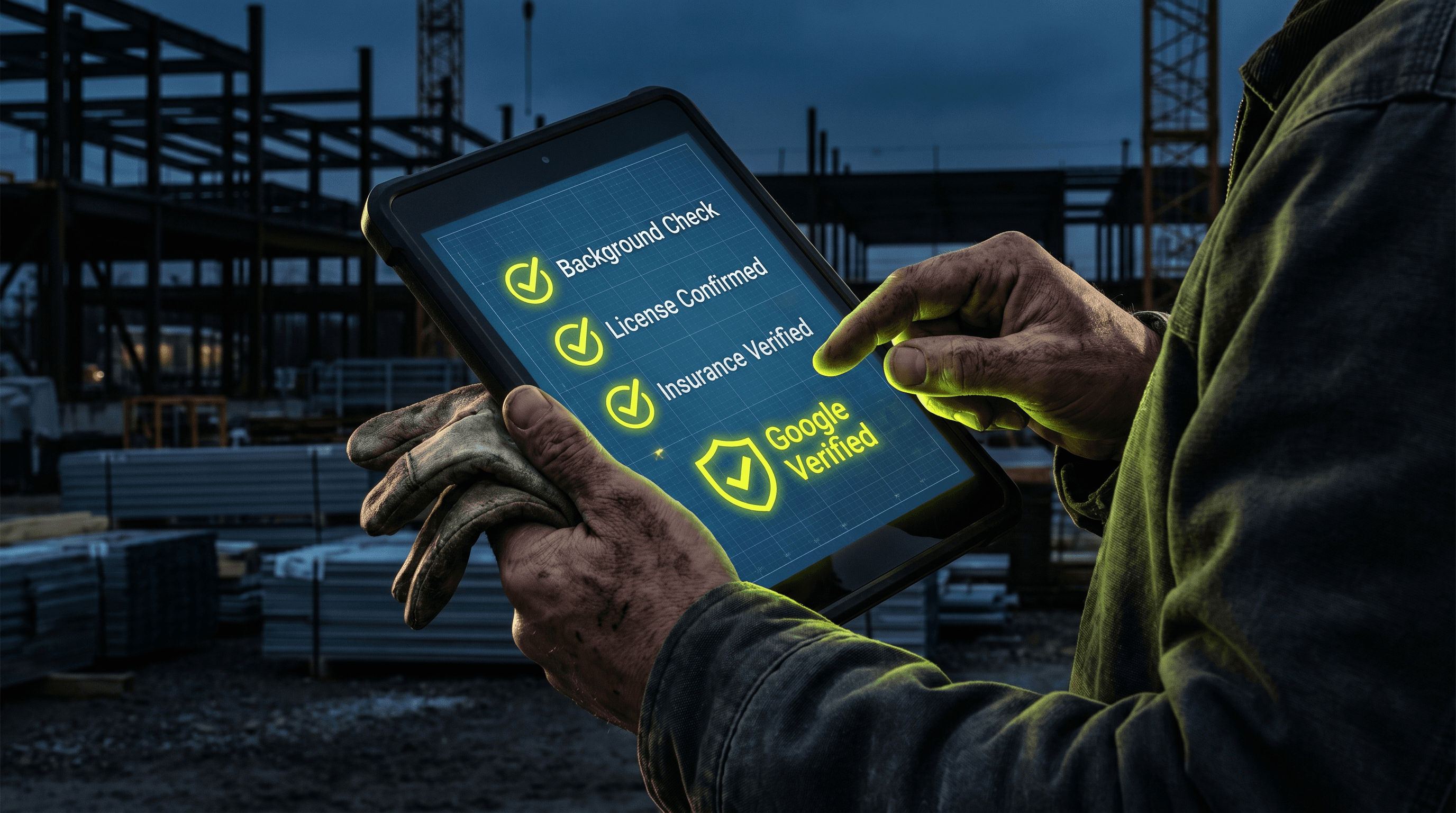
Getting the Google Verified badge — still widely searched as Google Guaranteed for contractors — requires passing a background check and license verification through Google's LSA program. That vetting process is a signal to homeowners before they even call. Research from Adapt Digital Solutions found that 29% of consumers prefer clicking LSA listings versus 11% for regular Google Ads. Google Guaranteed contractors who've gone through verification consistently see higher call-through rates as a result.
The Real Cost Per Lead Home Services Comparison
This is where the platforms separate. The cost per lead in home services looks similar on the surface — until you account for what actually closes.
| Metric | Google LSA | Angi |
|---|---|---|
| Average cost per lead | $53 | $50–$100 |
| Typical close rate | 31% | 10–15% |
| Cost per booked job | ~$168 | ~$542 |
| Lead exclusivity | Yes | No (4–5 contractors) |
| Inbound intent | High | Mixed |
Data: Blue Grid Media 2026 LSA Analysis and Angi vs. Google Ads comparison, tracking $6.72M in managed spend across 888 contractors.
At a $2,000/month budget, Blue Grid Media's data shows LSA producing approximately 11 booked jobs and $3,500 in profit, versus Angi producing approximately 3 booked jobs and a net loss. Same budget. Roughly 3.5x more booked jobs.
Response time compounds the LSA advantage further. That same analysis found that contractors responding to LSA leads within 5 minutes convert at 8x the rate of those waiting 30 minutes — and because LSA leads are exclusive, there's no competing contractor racing to call first.

Trade-Specific Performance Data
LSA economics vary by trade. Here's what the data shows across home service verticals:
- HVAC: Highest CPCs in the dataset but also highest urgency. Emergency HVAC calls convert fast and at high ticket values, making LSA economics particularly favorable.
- Roofing: Seasonal demand swings matter. LSA visibility during storm season captures demand that shared lead platforms can't serve as cleanly.
- Plumbing: Emergency and non-emergency split the market. LSA captures both. Shared lead platforms skew toward price-shoppers who have time to comparison shop.
- Landscaping/Outdoor Services: Longer consideration cycles. LSA still outperforms on cost per booked job, but follow-up sequences matter more for this trade than for emergency services.
When Angi Still Makes Sense
Angi isn't always the wrong answer. There are specific situations where it still works:
- Brand-new businesses with zero reviews: LSA requires a track record. If you're launching and need any jobs to start building reviews, Angi can fill that gap while you establish your Google presence.
- New market entry: If you're expanding into a city where you have zero name recognition, Angi exposure — even at a higher effective cost — can generate the initial jobs and reviews that seed your LSA profile.
Once you have 10+ Google reviews and a verified business profile, the math shifts decisively toward LSA as the better lead source for contractors at every budget level.
How to Transition Without a Lead Gap
The mistake most contractors make when leaving Angi is cutting it off before LSA is fully running. The transition takes two to four weeks to get verified and generating calls.
The cleanest handoff:
- Apply for LSA verification now, before you cancel Angi
- Reduce — but don't eliminate — Angi spend during the verification window
- Once LSA leads are flowing, cut Angi completely
- Use the budget difference to increase LSA spend and layer in paid search campaigns for supplemental volume on competitive keywords
Surge handles the full LSA setup, verification, and ongoing bid management. See how it works →
Frequently Asked Questions
What is the difference between Angi leads and Google Local Service Ads? Angi distributes the same lead to multiple contractors simultaneously — typically four to five at once. Google Local Service Ads are exclusive: the homeowner calls you directly from your verified listing. That exclusivity drives the close rate difference (31% LSA vs. 10–15% Angi) and cost per booked job ($168 vs. $542).
How much do Google Local Service Ads cost for contractors? The average cost per lead in home services on LSA was $53 in 2026 data tracking $6.72M in managed spend across 888 contractors (Blue Grid Media). Costs vary by trade and market — HVAC tends to run higher, landscaping lower. You pay per lead received, not per click.
Are Angi leads shared with other contractors? Yes. Angi's standard model distributes a single homeowner inquiry to four to five contractors simultaneously. The homeowner then receives multiple calls from competing contractors within minutes. This is the primary driver of Angi's lower close rates relative to exclusive lead sources like LSA.
What is the Google Guaranteed badge and how do I get it? Now officially called Google Verified, the badge appears on LSA listings that have passed Google's verification — background checks, license confirmation, and insurance review. Apply through the LSA dashboard and submit documentation. Approval typically takes two to four weeks. Google Guaranteed contractors who complete this process see measurably higher call-through rates from searchers.
Is Google LSA worth it for a small home service business? The data says yes, particularly for businesses with at least a handful of Google reviews. At an average $168 cost per booked job versus $542 on Angi, LSA produces significantly better economics even at modest monthly budgets. The primary requirement is passing the Google Verified background check and responding to leads quickly.
Paying Angi for leads you're sharing with four other contractors? Surge sets up and manages LSA for contractors — exclusive leads, Google Verified, fully installed in your account →